
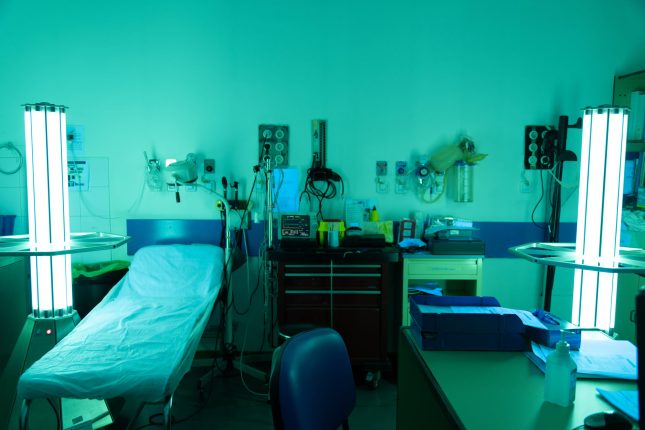
Can you trust that UV-C disinfection is really effective?
Recently, the FDA stepped in to evaluate and regulate UV disinfection devices in the hospital environment, but so far, only two UV providers have achieved FDA approval for specific products. That leaves many surface hygiene teams questioning the safety and efficacy of their disinfection devices.
Healthcare workers need to know more about the efficacy of common disinfection methods — especially as they deal with emerging surface contamination threats like C. auris. We’re unpacking the reasons why so many unregulated disinfection systems made their way into hospitals, how the FDA is responding now, and the differences between FDA approval and EPA registration for disinfectants.
FDA Authorization: How are UV disinfection devices evaluated?
In 2023, the FDA began evaluating and authorizing UV-C devices for use in healthcare settings.
The FDA classifies devices by risk and requires higher standards of proof for devices that it considers high-risk. UV-C devices fall into Class II, which includes devices of moderate to low risk to patient safety, and require a 510(k) clearance before marketing to healthcare facilities.
What is the 510(k) Clearance?
Most Class II devices must get a 510(k) clearance, which is also known as a Premarket Notification. When there is a predicate (a similar device that is already being legally marketed), the 510(k) process “involves a comprehensive review of safety and performance data for the device, which may include scientific, non-clinical, and clinical data, as appropriate, to determine if a new device is substantially equivalent to a device that is already on the market,” according to the FDA.
However, when there is no predicate device, manufacturers must seek a De Novo Classification before marketing a new device. The process varies by device, but the basic requirements for De Novo Classification include:
- Discussion of controls (general and special) that provide reasonable assurance of safety and effectiveness
- Clinical data (if applicable) that supports reasonable assurance of safety and effectiveness
- Non-clinical data, including bench performance testing
- Description of the probable benefits of the device when compared to the probable or anticipated risks when the device is used as intended
- Information on the reprocessing and sterilization, shelf life, biocompatibility, software, electrical safety and electromagnetic compatibility, animal study, and literature if applicable
Once a device achieves De Novo Classification, it becomes the standard for any equivalent devices that may follow.
What are the Standards for UV-C Disinfection?
The first UV-C device received De Novo Classification in 2023 as a “whole room microbial reduction device” and now sets the standard for safety and efficacy for all UV-C devices that may apply for FDA authorization.
In its De Novo Classification request, the UV-C manufacturer only demonstrated a 2-log reduction in pathogens, or a 99% kill rate. So far, only one other UV-C manufacturer has sought and received FDA 510(k) clearnance under these standards.
The Problems with UV-C Disinfection
The world of UV-C disinfection was largely unregulated until 2023, and even years later, we’re still dealing with the fallout from companies making vast claims about efficacy, without FDA approval to back them up.
Unregulated UV-C disinfectant vendors often make unsubstantiated claims that their efficacy is similar to that of authorized devices, even sharing white papers and attending trade shows to promote their devices. But without rigorous, unbiased evaluation by an overseeing body, it’s impossible to know if these products stand up to the safety and efficacy standards set by the FDA.
Even for FDA-authorized devices, UV comes with a host of limitations that make it difficult to achieve complete disinfection, including microshadowing and the lower standard of 2-log pathogen reduction.
EPA vs. FDA Requirements
While the FDA has jurisdiction over medical devices like UV-C for disinfection, the EPA oversees and registers sanitizers and disinfectants. UV-C devices are used to disinfect, but they are still classified as devices and are only beholden to the FDA.
Standards for Sanitizers and Disinfectants
EPA-registered disinfectant are held to a significantly higher level of disinfection than EPA-registered sanitizers.
The EPA’s registration standards for hospital-grade disinfectants do not rely on proving similar results to previously registered solutions, and instead, each disinfectant is evaluated on an individual basis.
According to the EPA, registered disinfectants must have demonstrated acceptable efficacy against two qualifying bacteria: Pseudomonas aeruginosa and Staphylococcus aureus. To reach acceptable efficacy, disinfectants must show a minimum of 4-log reduction of pathogens, or a 99.99% kill rate, a 100x higher kill rate than that accepted by the FDA for UV-C devices.
EPA-Approved Microburst from Nevoa
Is 2-log reduction in pathogens acceptable for your hospital? We don’t think so.
Nevoa is proud to share our EPA-registered Microburst disinfectant with our partner hospitals, ensuring complete disinfection for all patients and staff.
When using Nimbus to fog a room with Microburst, our solution demonstrated microbial reduction on treated surfaces far above EPA requirements, achieving a 6.77 log reduction or 99.9999% microbial reduction on treated surfaces. This level of microbial reduction is more than 10,000x higher than that demonstrated by FDA-authorized UV-C devices.
Compared to unregistered devices, the results are staggering. Research by the University of Arizona College of Public Health showed that an unregistered UV-C device fell significantly short of the standard set by the FDA, resulting in only 1.02 log reduction or 90.45% kill rate.
Rather than question if your UV-C device is legitimate, turn to disinfection that’s proven to outperform the EPA’s rigorous standards. Ask about Nevoa’s UV trade-in program to see how we can help you upgrade your hospital’s disinfection.