
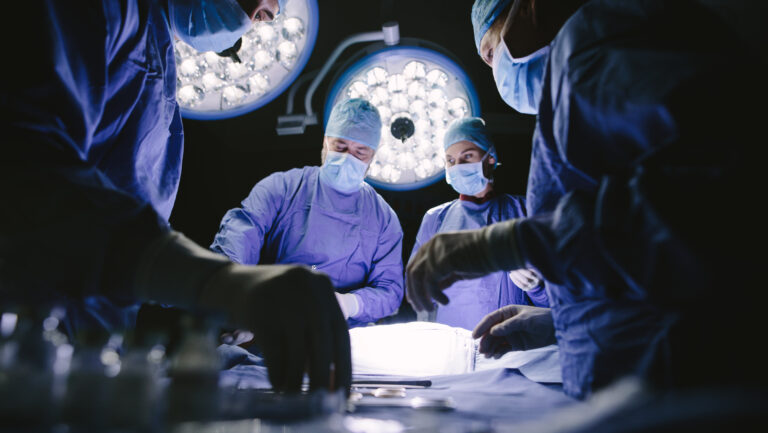
When it comes to protecting patient safety and promoting optimal patient outcomes in a healthcare setting, one of the biggest enemies is environmental surface contamination in the surgical environment. According to the CDC’s National Healthcare Safety Network:
“While advances have been made in infection control practices, including improved operating room ventilation, sterilization methods, barriers, surgical technique, and availability of antimicrobial prophylaxis, SSIs remain a substantial cause of morbidity, prolonged hospitalization, and death.”
Surgical Site Infections are a Significant Problem
Environmental surface contamination in healthcare settings is a well-documented challenge. Surgical environment surface hygiene is among the most critical and costly areas to address. In the U.S. alone, there are up to 300,000 SSIs annually, at a cost of up to $10 billion every year.
According to one report, poor surgical environment surface hygiene is linked to significant increases in mortality risk, hospital readmissions, and longer hospital stays. One report found that SSI-associated outcomes increase mortality risk by up to 11 times and extend stays by an average of 9.7 days.
The Shortcomings of Status Quo OR Disinfection
Advanced disinfection technologies like automated fogging systems and ultraviolet (UV) light have come a long way to reduce microbial contamination on environmental surfaces, but surgical rooms present their own challenges — namely time constraints between patient cases. As AORN’s Outpatient Survey Magazine reports, “The number one barrier to sound cleaning of OR surfaces between cases is time.”
Using advanced disinfection techniques takes time, so employing these methods between surgeries has historically not been practical or cost effective. As a result, only the first patient of the day benefits from truly advanced disinfection. Between cases, spot cleaning with disinfectant wipes is the norm.
Unfortunately, this method has been shown to be highly ineffective in a number of studies.
One AORN study showed that only 50% of surfaces in the OR are cleaned properly. A similar PubMed study revealed that just 25% of high-touch objects in the OR were truly clean with standard cleaning methods like wipes, while ScienceDirect reported that just 1 of 16 identified high-touch areas was categorized as “clean” after a manual clean.
Disinfectant wipes are also problematic when it comes to the transfer of microorganisms between surfaces. Because wipe solutions require contact time to be effective, microorganisms can be transferred to previously uncontaminated surfaces before that time has elapsed. One study that examined cross contamination by disinfectant wipes found that “all of the wipes used in this study transferred S. aureus and P. aeruginosa from an inoculated surface to previously uncontaminated surfaces.”
The Solution for Between-Case Advanced Disinfection
Until now, advanced disinfection between surgical cases has been too costly, too difficult, and too time consuming to provide truly effective disinfection between surgical cases. Healthcare facilities need an advanced disinfection solution that’s easy to use, practical to implement between cases, and demonstrates a high degree of efficacy.
Nevoa developed Stratus, a fast-acting and highly effective handheld fogger, to address these challenges because every patient deserves advanced surface disinfection — not just the first patient of the day.
Introducing: Nevoa Stratus
Stratus empowers healthcare facilities to provide the best possible surface disinfection throughout the day, between every patient procedure, without negatively impacting room turn time. The handheld fogger is fast, easy to use and highly effective.
Stratus is Fast and Easy to Use
Overburdened staff don’t have time to learn confusing new disinfection protocols, or employ time-consuming, labor-intensive cleaning methods. Turnover pressure adds an additional time constraint. And even wipes can be complicated to use due to long, and variable, contact times.
For example, disinfectant wipes commonly contain quaternary ammonium compound, which requires 10 minutes of surface contact time to be effective. Not only does staff not have time to wait 10 minutes between cases, the surface often dries out before 10 minutes have elapsed and requires an additional application to be effective.
Stratus is both faster and more effective than wipes. The handheld device is light, portable and simple to use correctly. It takes just two minutes of application time, and one minute of contact time for maximum effectiveness, which makes it ideal for between-case application.
Stratus is Highly Effective
Unlike wipes and UV, fogging achieves environmental surface coverage with a simple-to-follow protocol that takes minimal time and effort. The Stratus handheld fogger uses Microburst hypochlorous acid (HOCI) that’s 80 to 100 times more effective than bleach. The pH-neutral solution is eco-friendly, 100% biodegradable, and won’t damage equipment or degrade hard or soft surfaces. According to the U.S. Food and Drug Administration (FDA), HOCI has the “highest bactericidal activity against a broad range of microorganisms,” making it an impactful solution for advanced surface disinfection in surgical environments. And now, this highly effective disinfectant can easily be administered between cases for the first time.
Microburst EPA-registered, hospital-grade disinfectant requires just one minute of contact time to achieve up to 99.9999% microbial reduction on treated surfaces, including Staph / MRSA and Pseudomonas.
All Patients Deserve Our Best
Stratus empowers healthcare facilities to provide the best possible surface disinfection that’s easy, efficient and effective. By leveraging HOCl fogging technology and Nevoa’s Microburst Solution, Stratus delivers comprehensive environmental surface disinfection with easy handheld application between cases.
Don’t wait to make a difference in your healthcare facility and provide every patient with the advanced surface disinfection they deserve. Request a demo of Stratus today and experience the impact it can have on your facility’s surface hygiene and operational efficiency. Visit Nevoa’s website or contact our team today to get started on your journey to a cleaner, safer operating room.